When I first saw this gadget - the Handpresso - I realized it would only be a matter of time (and price) until I had it. The combination of fine coffee, DIY-like and outdoors won me over.
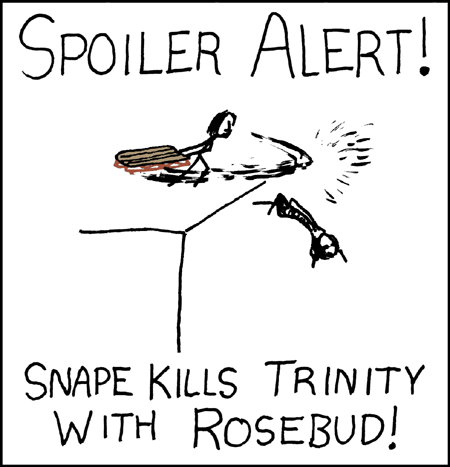
Initial price was quite a turn-off (Official price 99 Euro), but then came a coupon deal from one of the (too many) coupon sites - that made it possible. Only 200 shekels (= about 40 Euro) for a machine. Street price in Israel was higher at the time. In this price I can get two machines - one for me and another as a present for loved ones. Two for one - the coupon dream come true! The coupon site mentioned that this coupon is good for {spoiler alert} either the coffee pods or the ground coffee versions of the handpresso machine. I grind my coffee (and mix it with spices, and slightly roast it, and all sorts of silly stuff) - so I'm into the ground coffee model.
 |
| xkcd |
So I bought two coupons, and called the store to arrange for a pickup. "Do you have the ground coffee model?" - "We only have the model for coffee pods - not ground coffee - at the moment, please call again next week". This same line repeated itself - every week - for almost two months. As time was running out on the coupon validity, I became a bit less polite and asked the store owner if they were ever going to honor their coupon. Maybe they should search their store, warehouse, or other branches for my type of machines? So they found one. ONE! I went there to pick it up, and the store manager said it was the only one they have:
 |
| By Amazona_dufresniana_-two_captive-8a.jpg: TJ Lin [CC-BY-SA-2.0 (www.creativecommons.org/licenses/by-sa/2.0) or CC-BY-SA-2.0 (www.creativecommons.org/licenses/by-sa/2.0)], via Wikimedia Commons |
me: When are you going to bring more?
store manager: We aren't.
me: Excuse me?
store manager: You can take the model for coffee pods.
me: But I want the one for ground coffee.
store manager: We don't have it.
me: You can't force me into buying a machine I do not want.
store manager: That's what we have.
me: So what do you suggest I do with my coupon?
store manager: I don't know.
me: Can you refund it?
store manager: No.
me: Can I buy other store goods with it?
store manager: No.
me: So you basically say I am to burn it up?
store manager: No, you can take the coffee pods machine.
me: But I don't want it!
store manager: That's what we have. And you should notice that your coupon is about to expire.
me: What? Now you're seriously trying to force me into buying something I don't want.
store manager: There's nothing we can do.
me: I want to speak to your boss about it.
store manager: I am the store manager.
me: Are you the general manager?
store manager: No, there's the chain manager.
me: chain? You have only two stores.
store manager: That's our chain.
me: So I want to speak to your chain manager.
store manager: He may be unavailable.
me: Listen, I really do not want to take it to the next level. This thing could seriously hurt the store's reputation, not to mention the coupon site's credibility. If you cannot honor your coupon, give me my money back!
store manager: I cannot do that. Here's the number of the chain manager.
So the chain manager was unavailable, for hours on end.
And then I had an idea. I called the store manager and asked:
 |
| California State Motto |
And then I had an idea. I called the store manager and asked:
me: If I bought something at your store, haven't used it, and returned it the next day, would I get a refund?
store manager: It would depend on how you paid for it.
me: If I paid cash?
store manager: You'd get store credit.
me: And if I paid in credit card?
store manager: You'd get store credit.
me: So I'd get store credit in any case?
store manager: Yes
me: (breath, regulate pulse, continue)
me: So what if I took that coffee pods machine, and return it to you immediately. Would I get a store credit for the machine's price?
me: So what if I took that coffee pods machine, and return it to you immediately. Would I get a store credit for the machine's price?
store manager: (VERY long pause)
store manager: You mean you'd take the coffee pods handpresso machine, and come back, and ask for a refund?
me: Almost. I'd hand you the coupon. You'd hand me the machine. I'd hand it back. You'd issue me a certificate for store credit. I'd turn around, buy some goods, and immediately use the credit.
store manager: (yet another VERY long pause)
store manager: Ok.
 |
| MySpaceAnimations.com |
So the next day, first thing in the morning, I was back at the store. Took the machine from the shelf, gave it to the manager, with the coupon. He then told me that they had a special discount on the machine, and that he can give me a credit for 145 shekels. I looked at the sticker price - 400 shekels...
I paid 200 for the coupon.
This time I got a bit upset and told the manager that now he's really pushing it, and demanded to talk to the chain manager. Again, the story of the unavailability of the top dog, but I quietly explained that I'm not moving away from the counter until I talk to the chain manager, and that things might get extremely loud in the store if I didn't get the guy on the phone, immediately.
Extremely LOUD…
So they got him - but he was driving his motorcycle (sound's lame, doesn't it?) and then he was on his way to the elevator, so he asked that I wait a few minutes.
So I waited. And then we talked.
He said that he is the manager and the lawyer of the chain. "Good", I said, and told him the story, in a very brief way, and explained that as the manager AND the lawyer of the firm, he must be well aware of the possible implications when a store attempts to trick a customer like that.
He said that no one is trying anything, and that of course I should get my money's worth, and that if I only wait for a while he'd see what he can do. I told him that I'm sure that as the manager AND the lawyer of the chain, he CAN do it.
Two minutes later, the store manager said that I can take 200 shekels worth of store good, so I did. 200 shekel's worth of coffee beans.

Was I happy?
Not really. I got less than I should have, went through some hassle, and didn't get what I initially wanted.
Was the store happy?
I don't know (or care). The store got more than it should have, less than it wanted.
Lessons learned?
The fine print is there for a reason. It is used loosely when the sun is shining, to the letter when things go south. Hope for the best - prepare for the fine print.
Was I satisfied?
Yes. I did get the one machine, some coffee to use with it, found one creative solution and one semi-hidden inner tasmanian devil.
I love tasmanian devils!
So I waited. And then we talked.
He said that he is the manager and the lawyer of the chain. "Good", I said, and told him the story, in a very brief way, and explained that as the manager AND the lawyer of the firm, he must be well aware of the possible implications when a store attempts to trick a customer like that.
He said that no one is trying anything, and that of course I should get my money's worth, and that if I only wait for a while he'd see what he can do. I told him that I'm sure that as the manager AND the lawyer of the chain, he CAN do it.
Two minutes later, the store manager said that I can take 200 shekels worth of store good, so I did. 200 shekel's worth of coffee beans.

Was I happy?
Not really. I got less than I should have, went through some hassle, and didn't get what I initially wanted.
Was the store happy?
I don't know (or care). The store got more than it should have, less than it wanted.
Lessons learned?
The fine print is there for a reason. It is used loosely when the sun is shining, to the letter when things go south. Hope for the best - prepare for the fine print.
Was I satisfied?
Yes. I did get the one machine, some coffee to use with it, found one creative solution and one semi-hidden inner tasmanian devil.
 |
| http://animal.discovery.com/mammals/tasmanian-devil/ |
(and on special occasions - venting)